The Beginning of Full-Scale War, Late 1991–Early 1992
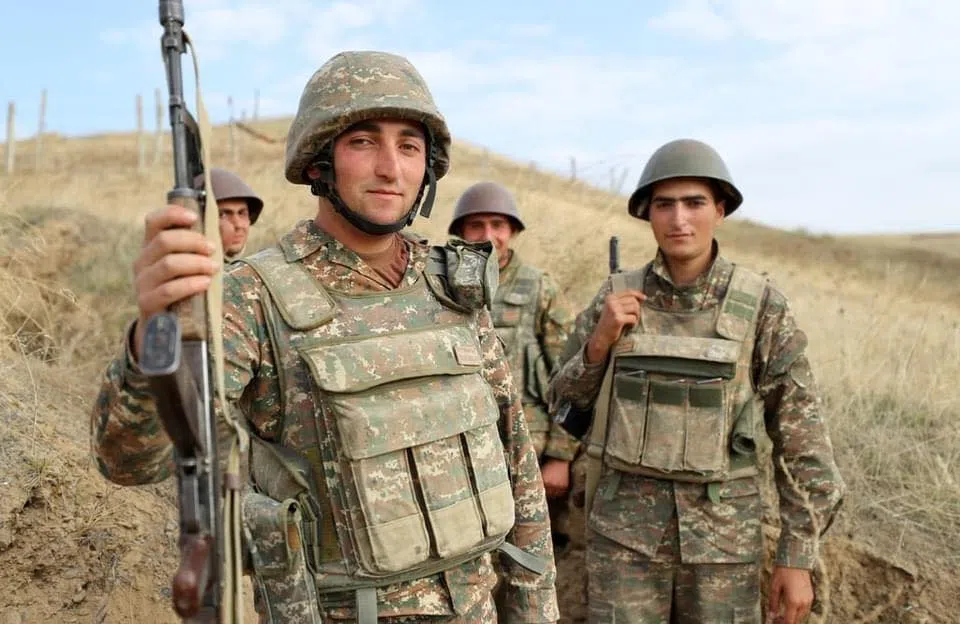
By late 1991, armed clashes had intensified across Nagorno-Karabakh.
The conflict increasingly involved mortars, artillery, armored vehicles, and organized military formations.
The withdrawal and fragmentation of Soviet military units created opportunities for local forces to acquire heavier weapons.
The siege and bombardment of Stepanakert
Stepanakert, the main Armenian-populated city in Nagorno-Karabakh, came under repeated bombardment.
Azerbaijani forces occupied elevated positions in Shusha and surrounding settlements.
The city's geographical position made it vulnerable to artillery and rocket fire from nearby heights.
Civilian homes, apartment buildings, schools, hospitals, and infrastructure were damaged.
Residents spent long periods in basements and shelters.
Electricity, heating, food supplies, and medical services were frequently disrupted.
The bombardment had a severe psychological impact on the civilian population.
Children were forced to live under constant threat, and families struggled to obtain basic necessities.
The use of indiscriminate weapons in populated areas raised serious concerns under international humanitarian law.
Armenian armed formations
At the beginning of the conflict, Armenian forces were not a fully unified regular army.
They consisted of local defense groups, volunteer detachments, former Soviet servicemen, and formations organized around individual commanders.
Over time, these units developed more centralized structures and coordination.
Prominent Armenian military figures associated with the war included:
- Monte Melkonian, who became a commander in the Martuni sector.
- Vazgen Sargsyan, a major organizer of Armenia's military institutions.
- Samvel Babayan, who rose to prominence in the Karabakh Armenian military leadership.
- Arkady Ter-Tadevosyan, widely associated with the planning of the Shusha operation.
- Robert Kocharyan and Serzh Sargsyan, who held important political and organizational roles in Nagorno-Karabakh during the conflict.
The exact responsibilities of particular commanders changed over time, and the war cannot be accurately reduced to the actions of a few individuals.
Azerbaijani military formation
Azerbaijan faced comparable challenges in creating a national military force after the collapse of Soviet institutions.
Its forces included regular army units, police formations, volunteers, and politically affiliated armed groups.
Azerbaijan inherited or acquired substantial Soviet military equipment, but military effectiveness was undermined at different stages by inadequate coordination, rival command structures, political instability, and uneven training.
Both sides depended heavily on former Soviet personnel, weapons, and military infrastructure.

