Why the 1994 Ceasefire Failed to Produce Lasting Peace
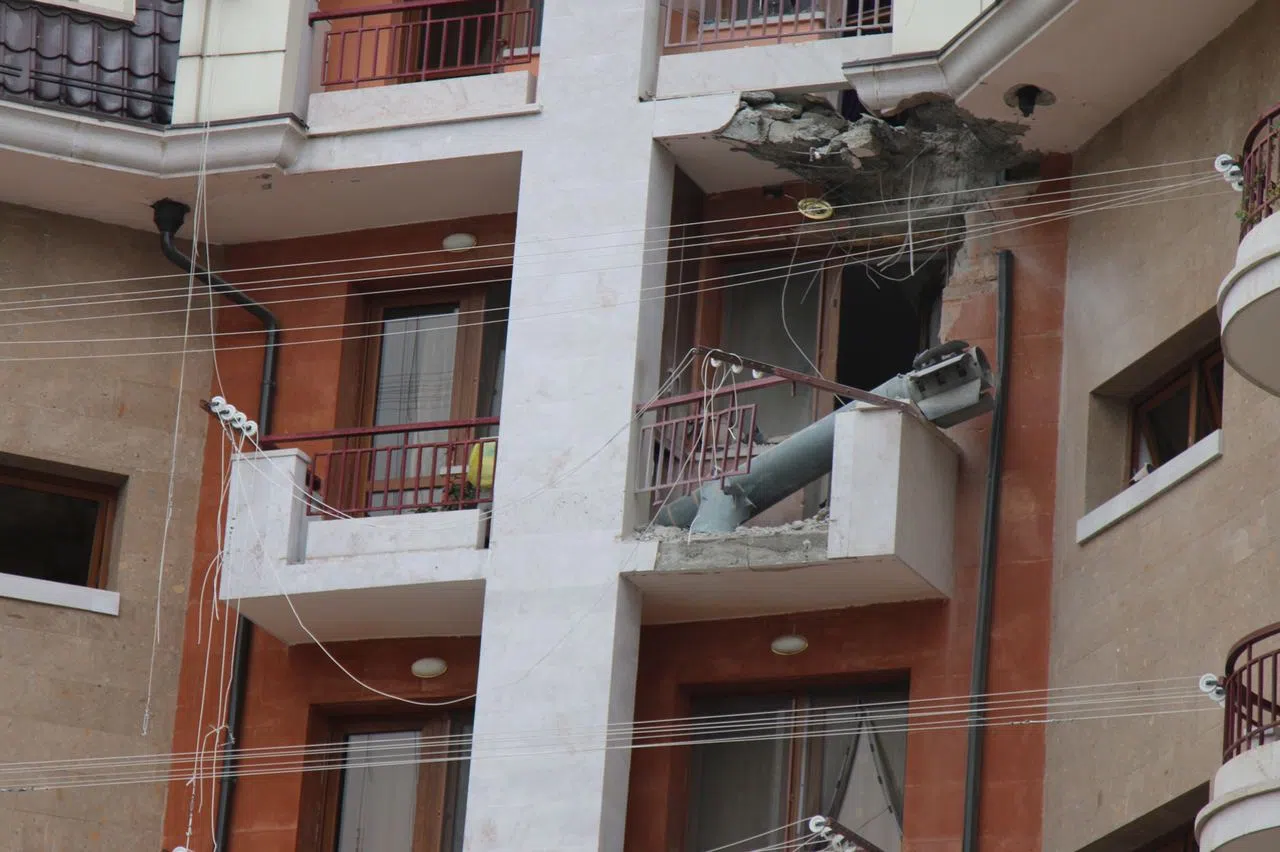
The ceasefire reduced large-scale fighting, but it did not remove the causes of conflict.
The central disagreements remained unresolved.
The Armenian population of Nagorno-Karabakh feared renewed Azerbaijani rule without credible guarantees of physical security and political rights.
Azerbaijan rejected the indefinite loss of internationally recognized territory and demanded the return of displaced citizens.
Armenian forces retained territory beyond the former autonomous oblast.
Azerbaijan increasingly sought to reverse the territorial situation through military modernization and diplomacy.
Both societies developed national narratives centered on wartime suffering, military sacrifice, displacement, and historical claims.
Militarization of the line of contact
The ceasefire line became heavily fortified.
Military positions, trenches, artillery systems, observation posts, and minefields were established.
Ceasefire violations continued.
Soldiers and civilians were periodically killed or injured by gunfire, shelling, and other incidents.
The absence of a final peace agreement allowed military confrontation to remain a persistent possibility.
The April 2016 fighting
In April 2016, intense fighting erupted along the line of contact.
The four-day escalation caused significant military casualties and resulted in limited territorial changes.
It demonstrated that the 1994 arrangements remained fragile.
The Second Nagorno-Karabakh War of 2020
On September 27, 2020, a new large-scale war began.
Azerbaijan, supported politically and militarily by Turkey, used modern weapons systems, including drones, in an offensive that reversed much of the territorial outcome of the first war.
The November 9–10, 2020, trilateral statement ended the main fighting.
Azerbaijan recovered control of substantial territory, including Shusha, and Armenian forces withdrew from additional surrounding districts.
Russian peacekeepers were deployed to parts of Nagorno-Karabakh.
The events of 2023
In September 2023, Azerbaijan launched a military offensive against the remaining Armenian-controlled authorities in Nagorno-Karabakh.
The de facto authorities agreed to disarm and subsequently announced the dissolution of their institutions.
More than 100,000 ethnic Armenians fled to Armenia.
The mass exodus effectively ended the Armenian-majority population's longstanding presence in the territory on the scale that had existed before the offensive.
Armenian officials and rights advocates described the displacement as ethnic cleansing, while Azerbaijan maintained that residents could remain under Azerbaijani sovereignty. The circumstances of the exodus, including the preceding blockade, military operation, and fears for civilian security, remain central to its humanitarian and legal assessment.
These later developments do not change the historical events of 1988–1994, but they demonstrate why the First Nagorno-Karabakh War cannot be understood as a conflict that was permanently resolved in 1994.